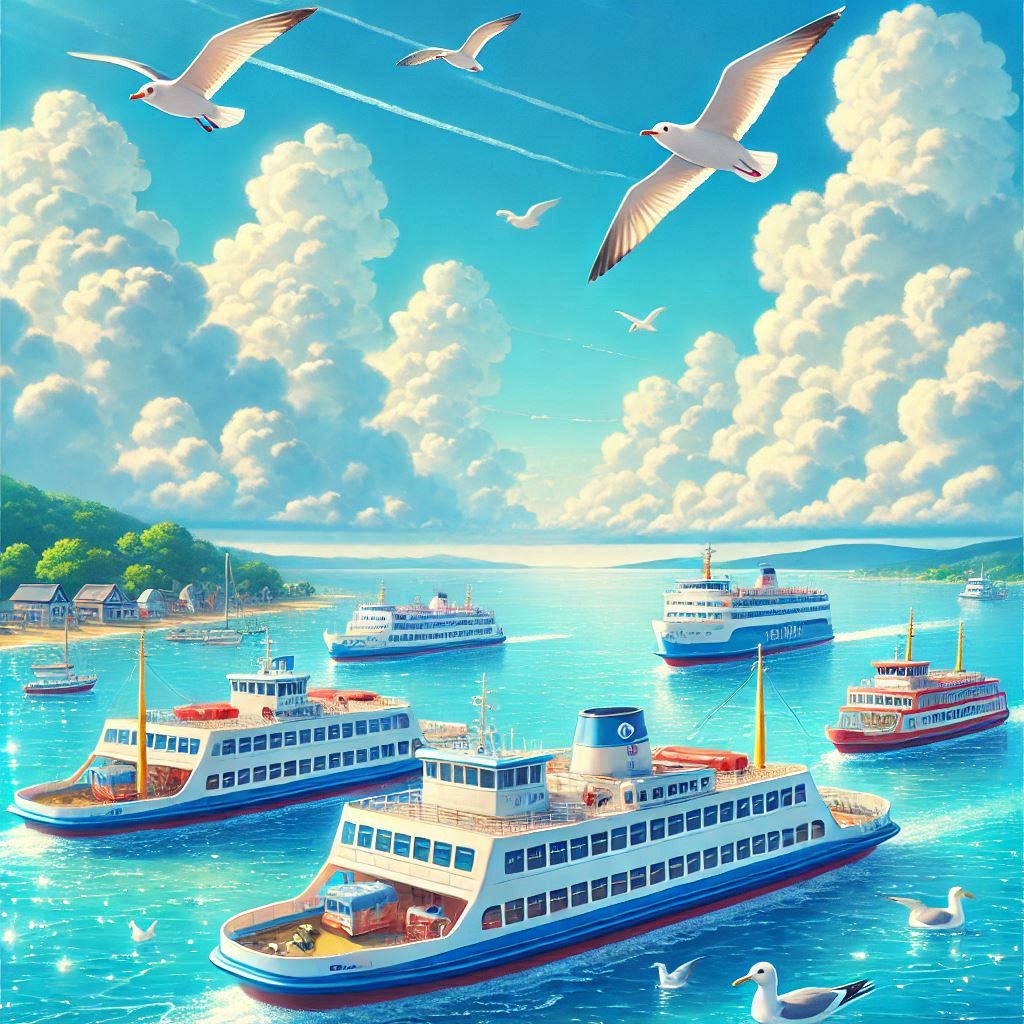
Introduction:
The history of ferries is a testament to humanity’s enduring quest to connect disparate lands and communities. These vessels, which have facilitated the crossing of water bodies for centuries, play a vital role in commerce, transportation, and cultural exchange. From rudimentary rafts to sophisticated, high-tech vessels, the evolution of ferries reflects the ingenuity and resourcefulness of societies around the world.
In ancient times, ferries were simple craft made from wood, reeds, or animal hides, used to traverse rivers, lakes, and coastal waters. Evidence of early ferry services dates back to Mesopotamia, Egypt, and the Indus Valley civilization, where river crossings were essential for trade and communication. These early ferries were often manually powered by oars or poles and operated by individuals who provided transportation services to travelers and merchants.
The classical civilizations of Greece and Rome saw the development of more advanced ferries, with improved designs that enhanced stability and capacity. Ferries became an integral part of daily life, facilitating the movement of people, goods, and even armies. The Romans, in particular, built a network of ferry routes across their vast empire, using large flat-bottomed boats known as “navis lusoria” to transport troops and supplies across rivers such as the Rhine and the Danube.
During the Middle Ages, ferry services continued to expand, driven by the growth of trade and the establishment of pilgrimage routes. The advent of the sailing ship brought new opportunities for ferry operators, allowing them to offer longer and more reliable crossings. In coastal regions, ferries began to play a crucial role in linking islands to the mainland and connecting isolated communities to larger trade networks.
The Industrial Revolution marked a significant turning point in the history of ferries. The introduction of steam power revolutionized maritime transportation, making it possible for ferries to travel faster and more efficiently. Steam-powered ferries, such as the iconic SS Great Western, began to dominate major ferry routes, offering scheduled services and greater capacity. This period also saw the emergence of specialized ferry designs, including double-ended ferries with propulsion systems at both ends, which improved maneuverability and docking efficiency.
The 20th century brought further advancements in ferry technology, with the introduction of diesel engines and the rise of the automobile ferry. The increased popularity of cars led to the development of roll-on/roll-off (RoRo) ferries, designed to carry vehicles as well as passengers. Ferries like the Staten Island Ferry in New York and the ferries of the British Isles became symbols of modern transportation, providing essential links in regional and international travel networks.
In recent decades, ferries have continued to evolve, incorporating cutting-edge technologies and sustainable practices. High-speed catamarans and hovercraft have reduced travel times on busy routes, while environmentally friendly ferries powered by electric or hybrid engines are helping to reduce the maritime industry’s carbon footprint. Today, ferries remain a vital component of global transportation, connecting remote communities, supporting tourism, and facilitating trade across water bodies of all sizes.
As we look back on the history of ferries, we see a story of innovation, resilience, and the enduring human desire to bridge the gaps between lands and cultures. From ancient river crossings to modern high-speed vessels, ferries have played an essential role in shaping the world we live in, bringing people together and fostering connections that transcend borders. Join us as we explore the fascinating journey of ferries through time, celebrating their contributions to human progress and their ongoing significance in our interconnected world.